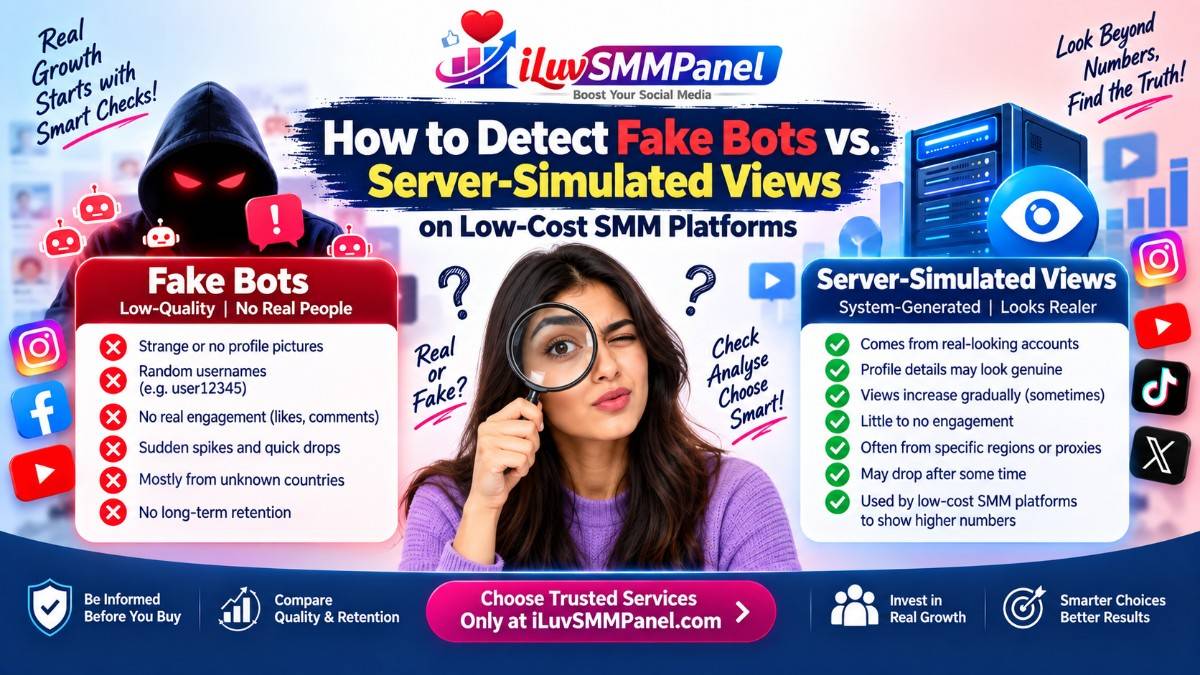
Detecting Fake Bots vs. Server-Simulated Views
To protect your social media channels from algorithmic bans, it is critical to use a safe cheap smm panel that deploys server-simulated views rather than low-quality fake bots. Fake bots use static data-center IP addresses, generate 0-second watch times, and are instantly purged by spam filters. Conversely, server-simulated views utilize distributed residential proxies to spoof authentic device fingerprints, generating high-retention watch times and natural engagement pacing that completely bypasses algorithmic detection.
A common fear when purchasing budget marketing services is the risk of algorithmic penalization. Creators often assume that any inexpensive service must be powered by malicious bot nets that will trigger a shadowban. While this is absolutely true for unvetted, low-tier reseller panels, it represents a fundamental misunderstanding of how enterprise wholesale infrastructure operates.
The social media growth industry has evolved far beyond rudimentary click-farms. Today, the safety of your account is entirely dependent on the quality of the backend routing API. By learning to distinguish between dangerous fake bots and algorithmically compliant server-simulated engagement, you can safely scale your brand at wholesale costs.
The Anatomy of a Fake Bot
Fake bots are the remnants of early 2010s marketing tactics. They are cheap to produce, highly unstable, and easily detected by modern AI-driven spam filters on platforms like Instagram and YouTube. You can identify fake bot traffic through several key indicators:
- Static Data-Center IPs: Fake bots operate on massive blocks of sequential IP addresses hosted on cloud platforms (e.g., AWS, DigitalOcean). Social networks flag these subnets instantly.
- Zero Watch Time: A bot script pings your video URL and disconnects in milliseconds. This results in a massive spike in "views" but plummets your Average View Duration (AVD), severely harming your organic reach.
- Identical Fingerprints: Low-quality bots share the exact same user-agent string (the browser and device data), making it mathematically obvious to the algorithm that the traffic is artificial.
Server-Simulated Views: The Algorithm-Safe Solution
To safely provide engagement at scale, a reputable wholesale provider utilizes an entirely different infrastructure: Server-Simulated Views routed through residential proxy networks. This method mimics authentic human behavior so closely that it passes deep algorithmic audits.
| Detection Metric | Dangerous Fake Bots | Safe Server-Simulated Views |
|---|---|---|
| Network Origin | Known Cloud Data Centers | Residential ISP Proxies (e.g., Comcast, Jio) |
| Retention / Watch Time | < 2 Seconds (Damages AVD) | 30 to 120 Seconds (Boosts AVD) |
| Delivery Pacing | Instant Unnatural Spikes | Algorithmic Drip-Feed |
| Device Fingerprinting | Static / Missing | Dynamic (Spoofs iOS, Android, Windows) |
When you leverage this advanced infrastructure, you are not buying "bots." You are renting processing power from a network that generates cryptographically valid, human-like sessions.
Validating Your Provider
The only way to verify you are using high-quality infrastructure is by checking the specific package details before ordering. A trustworthy panel will explicitly label their services.
Always look for services marked as "High Retention," "Non-Drop," or "Real User." Furthermore, ensure the panel offers a Drip-Feed function in their API. By breaking a 10,000-view order into 10 smaller batches delivered over a few hours, you perfectly simulate the velocity of a naturally viral post, ensuring absolute safety for your primary accounts.
Frequently Asked Questions
Can server-simulated views trigger a shadowban?
How do I know if my views are high retention?
Are high-retention services more expensive?
Protect Your Channel with Safe Infrastructure
Stop risking your accounts with unstable bot networks. Access premium, server-simulated views and high-retention engagement backed by our non-drop guarantees.
🚀 Access Safe SMM Services