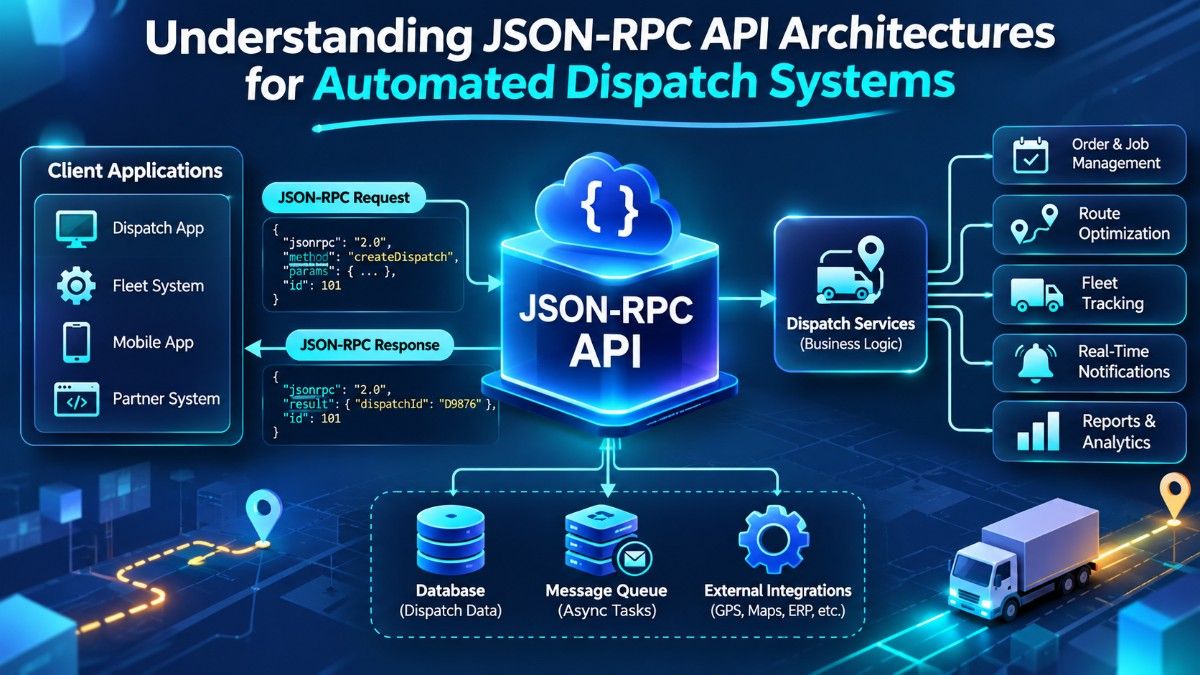
How does an automated JSON-RPC API handle high-concurrency order placement in backend systems?
JSON-RPC API architecture refers to a stateless, lightweight remote procedure call protocol encoded in JSON that enables seamless machine-to-machine communication for automated order dispatching. By serializing method invocations, parameters, and unique request identifiers into compact payloads, backend servers process thousands of concurrent transactions without session state overhead.
When enterprise software applications and high-frequency resellers synchronize thousands of simultaneous tasks across distributed nodes, traditional multi-layer RESTful routing often introduces serialization bottlenecks. Because every HTTP request in a verbose architecture carries redundant header metadata, sudden traffic spikes can exhaust worker threads and delay database commits.
To eliminate connection bottlenecks and maintain sub-second execution speeds, engineering teams integrate directly with our automated platform's API to streamline server-to-server order fulfillment. By structuring every remote procedure call around a deterministic JSON-RPC payload, client portals transmit single or batched instructions over persistent keep-alive connections with minimal bandwidth consumption.
What are the core structural components of a stateless JSON-RPC request payload?
A compliant JSON-RPC 2.0 specification relies on four mandatory structural fields to guarantee deterministic parsing and asynchronous response matching across distributed backend workers:
- Component #1 — Protocol Version Declaration (jsonrpc): Explicitly defines the protocol string (such as
"2.0") so the receiving parser applies strict schema validation rules before allocating compute threads. - Component #2 — Target Procedure Identifier (method): Contains the exact string name of the backend function to be invoked (for example,
"order.create","order.status", or"balance.query"), routing the payload directly to the designated microservice handler. - Component #3 — Structured Parameter Object (params): Passes structured key-value arguments—such as service ID, target URI, execution quantity, and drip-feed intervals—as a compact JSON object or positional array.
- Component #4 — Correlation Transaction Token (id): Assigns a unique client-generated string or integer identifier that the server echoes back verbatim in the response payload, allowing asynchronous event loops to match out-of-order replies with zero state collision.
How does JSON-RPC batching compare to standard sequential REST HTTP requests under load?
Review the architectural telemetry comparison below to understand how stateless procedure calls outperform legacy sequential requests during high-concurrency traffic bursts:
| Architectural Metric | Sequential Legacy HTTP Polling | High-Concurrency JSON-RPC Dispatch |
|---|---|---|
| Transport Overhead | High (Separate TCP/TLS Handshake Per Call) | Minimal (Single Batch Array Over Keep-Alive) |
| Payload Serialization Speed | Slow (Verbose Nested Resource Trees) | Sub-Millisecond Native JSON Parsing |
| Concurrency Thread Scaling | Prone To Socket Exhaustion Under Spikes | Non-Blocking Async Worker Pool Allocation |
| Error Isolation Granularity | Ambiguous HTTP 500 Status Failures | Standardized Error Codes (-32700 To -32603) |
How do backend worker nodes process batched JSON-RPC order arrays without blocking?
Follow this 3-step execution pipeline to see how an enterprise dispatch engine ingests, validates, and commits high-volume order requests concurrently:
-
Ingest And Validate The Incoming JSON Payload Stream
The API gateway receives the HTTP POST body, verifies the cryptographic API token, and runs a schema syntax check to confirm all required
methodandparamskeys are present before touching the primary database. -
Dispatch Tasks Into Non-Blocking Asynchronous Worker Queues
Rather than holding the client connection open while downstream nodes execute, the controller pushes validated jobs into an in-memory message broker and immediately returns a structured JSON-RPC confirmation containing the assigned
order_id. Developers can inspect endpoint parameters inside our REST & JSON API documentation. -
Reconcile Execution States Via Correlation IDs
When a client application sends a batch array of 100 status checks in a single HTTP request, the backend evaluates all 100 IDs in parallel across read-replica shards and returns a single consolidated JSON array mapped to each original
idtoken.
Engineering Note: Enforcing Idempotency Keys On Retry Loops
When network jitter interrupts a client connection before the response packet arrives, automated retry scripts may accidentally transmit the same payload twice. Always pair your JSON-RPC id field with a deterministic client-side UUID so the backend deduplication filter recognizes the retry and returns the cached result without double-billing the wallet balance.
Ready To Integrate High-Concurrency Automated Order Dispatch?
Connect your storefront or custom script to our low-latency API endpoints with instant webhook status synchronization.
Generate Your API Key TodayFrequently Asked Questions
How does JSON-RPC 2.0 handle partial failures inside a batched request array?
When a client submits a batch array containing multiple procedure calls, the server processes each object independently. Valid requests return standard result objects, while any malformed call returns an isolated error object mapped to its specific correlation ID without aborting the remaining batch items.
What standard error codes are returned during a JSON-RPC validation failure?
The JSON-RPC specification reserves structured integer codes including -32700 for Parse Errors (invalid JSON syntax), -32600 for Invalid Requests, -32601 for Method Not Found, and -32602 for Invalid Method Parameters.
Why is stateless payload serialization important for horizontal server scaling?
Because every JSON-RPC payload contains its own authentication token, method name, and correlation ID, any available backend node behind a load balancer can process the request immediately without querying sticky session memory.

Luv Kalra
SEO Expert & Founder of iLuv SMM PanelWith 19+ years of technical SEO and digital marketing experience, Luv engineers high-concurrency API dispatch architectures and automated telemetry systems for enterprise agencies.